Burnt out or just tired? How to tell, and what actually helps

What is burnout?
In 2019, the World Health Organisation included burnout in ICD-11, its international classification of diseases. It defines burnout as a syndrome resulting from chronic workplace stress that hasn't been successfully managed. WHO classes it as an occupational phenomenon, not a medical condition.
What are the signs of burnout?
WHO describes three:
- Exhaustion. Feeling drained or depleted, even after a weekend off.
- Distance. Growing cynical or detached about your job, or dreading it.
- Less effectiveness. Feeling like you're working harder and getting less done.
What actually helps?
The things that change the cause:
- Name it. Saying "I think I'm burnt out" out loud, to a friend or your manager, is often the hardest and most useful step.
- Look at the workload. Write down everything you're carrying, then decide what can be dropped, delegated or delayed.
- Protect real rest. Evenings and weekends where work isn't in your pocket.
- Lean on people. Burnout thrives in isolation. Talk to friends, family or colleagues.
- See your GP. They can help you talk it through, rule out anything else, and point you to support.
If you're struggling right now, the NHS website has guidance on stress, and Mind offers a free information line.
Can Daily Flow help at all?
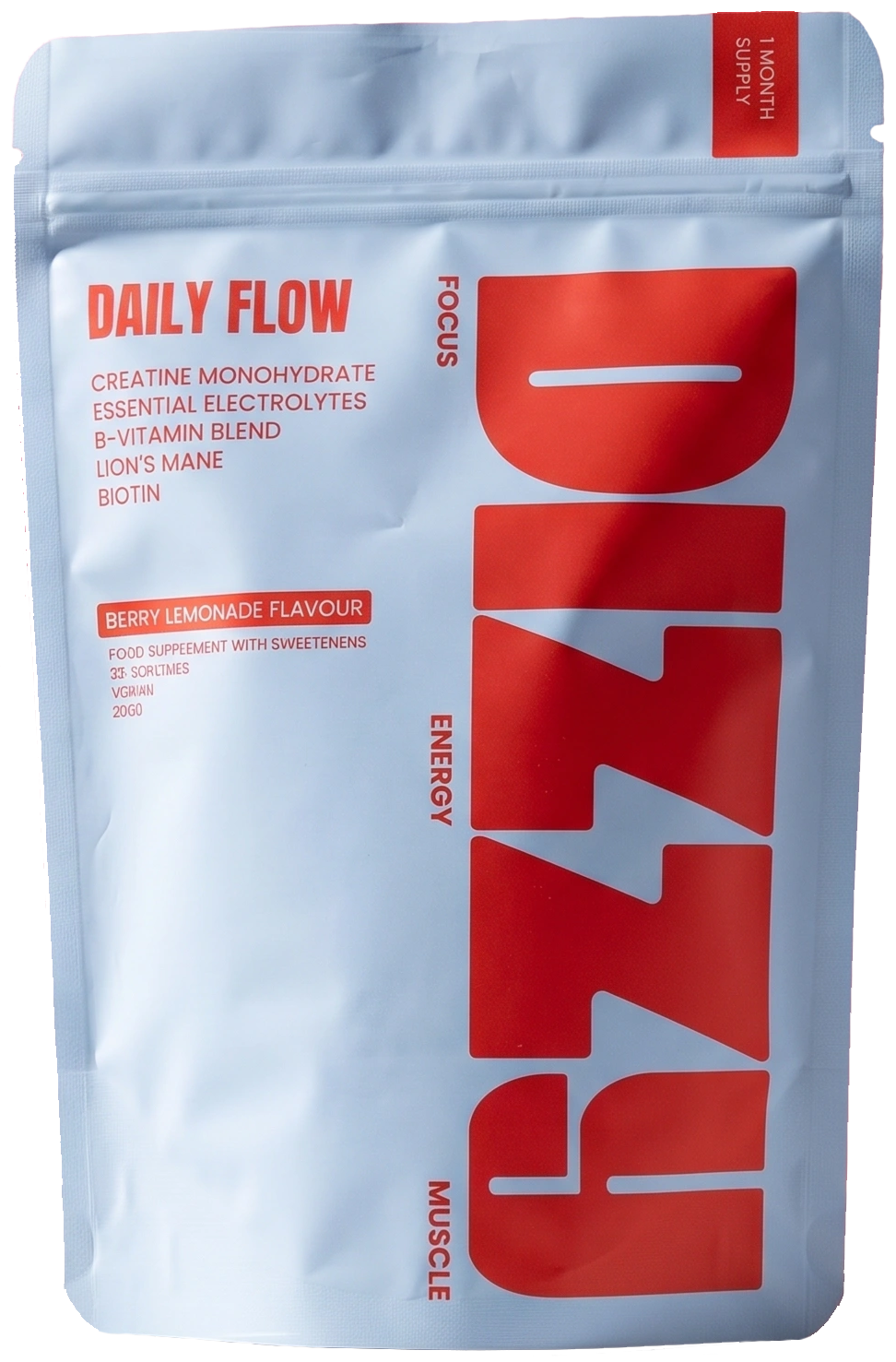
Not with burnout itself. Daily Flow contains magnesium, riboflavin, niacin, vitamin C and pantothenic acid, which contribute to the reduction of tiredness and fatigue. That can be one small part of looking after yourself, but it isn't a treatment, and the steps above come first.
I'm tired all the time. Is that just normal?
It's common, which isn't the same thing. The NHS advises seeing a GP if you've been tired for a few weeks and aren't sure why, or if it's affecting your daily life.
So why does DIZZY exist?
Because somewhere along the way, exhaustion became part of how women describe themselves. "I'm always tired" became a personality trait, then a joke, then just the background noise of a busy life. We started DIZZY to push back on that.
Daily Flow is a small daily routine for people who already give a lot to their day. It isn't a fix for a life that's asking too much of you. That's something you're allowed to change.
If you take one thing from this post, let it be this: stop accepting the always-tired version of yourself as normal.
Your questions, answered
Can supplements help with burnout?
No supplement can fix burnout. What helps is changing the workload, rest and support behind it, and seeing your GP.
What is burnout?
The World Health Organization defines burnout in ICD-11 as a syndrome resulting from chronic workplace stress that hasn't been successfully managed. It's classed as an occupational phenomenon, not a medical condition.
What are the signs of burnout?
The World Health Organization describes three: feeling drained or depleted, growing distant or cynical about your job, and feeling less effective at work.
Is being tired all the time normal?
It's common, but not something to accept. The NHS advises seeing a GP if you've been tired for a few weeks and aren't sure why, or if it affects your daily life.